Co-presented by:
In association with:
Organised by:
Recycling Vision Series 2026 – Pune Edition Report
Inclusive & Decentralized Recycling Ecosystems
Maharashtra strengthens circular economy push
Maharashtra is strengthening its circular economy ecosystem through expanding recycling infrastructure, policy support, and industrial participation. At the Recycling Vision Series 2026 – Pune Edition, organized as part of the Plastics Recycling Show India and the Bharat Recycling Show 2026, by the Waste & Recycling magazine in association with the Maharashtra Pollution Control Board (MPCB), stakeholders across government, recycling, manufacturing, municipal administration, and environmental organizations discussed the realities shaping India’s transition towards circularity.
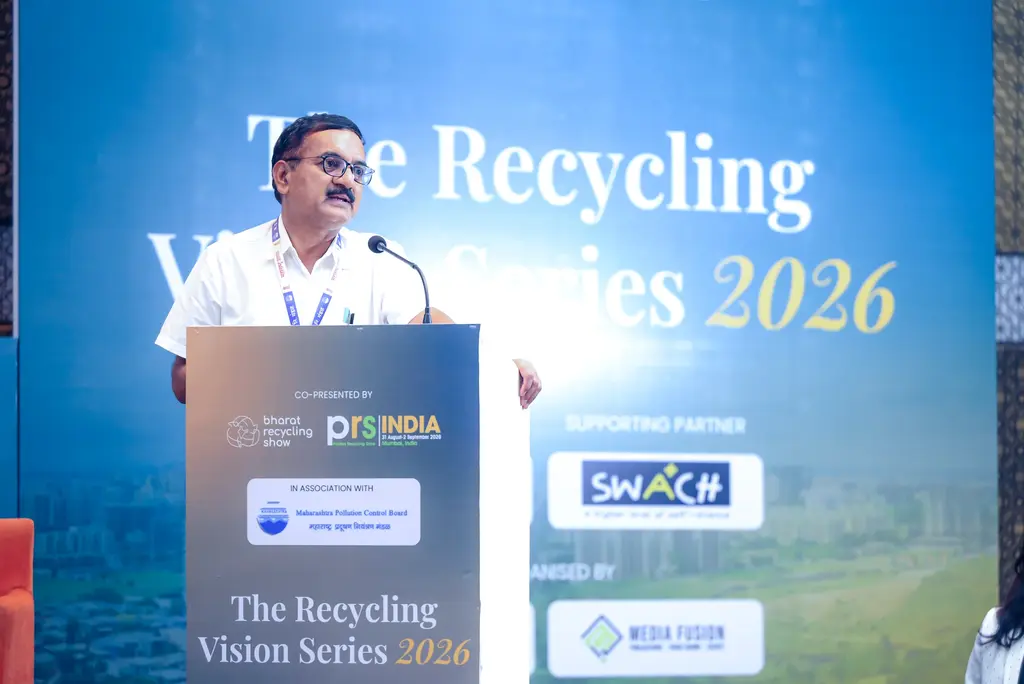
J S Salunkhe, Joint Director, MPCB, welcomed the participants to the series.
Opening discussions highlighted MPCB’s plans to establish five recycling hubs across Maharashtra, signaling a broader push towards decentralized resource recovery systems.
MPCB Chairman Siddhesh Kadam noted that while these plans are still at a nascent stage, the regulatory body intends to strengthen recycling ecosystems across multiple waste streams. Referring to Pune’s position as both an IT and automobile hub, Kadam said the city faces growing challenges around e-waste, end-of-life batteries, tyre, and end-of-life vehicles.
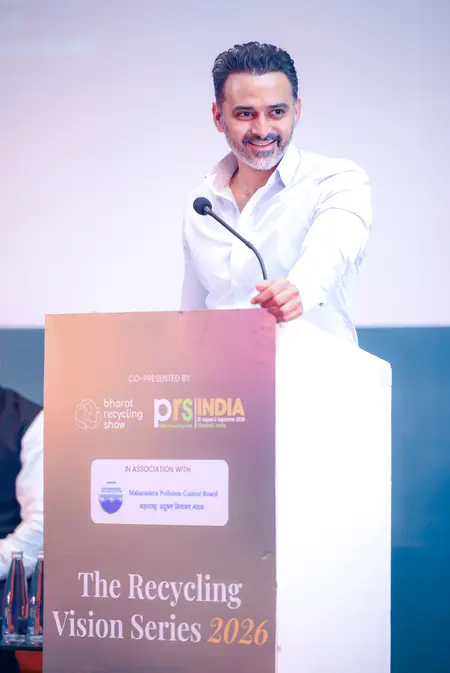
The event brought together policymakers, recyclers, OEMs, technology providers, municipal authorities, and informal waste sector representatives to discuss operational bottlenecks, implementation gaps, reverse logistics, safety systems, and evolving circular economy frameworks.
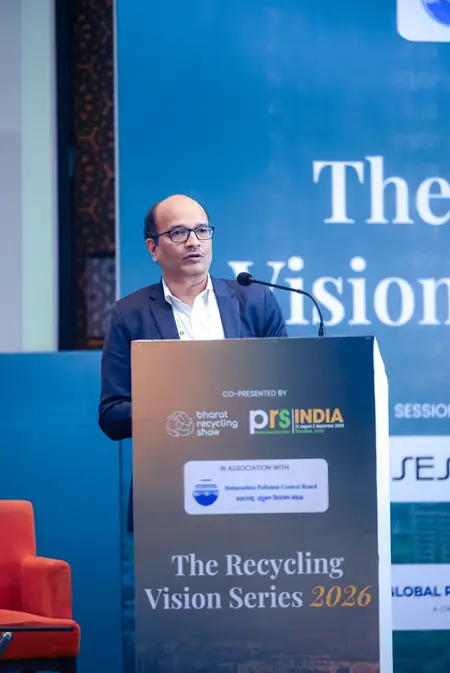
Meanwhile, in his presentation, Makarand Mandke, Managing Director, Sesotec India Pvt Ltd, highlighted that India’s recycling sector is transitioning from a conventional waste management approach towards a circular materials economy, driven by EPR mandates, recycled content requirements, and digital traceability systems. He noted that advanced AI- and NIR-based sorting technologies will play a key role in improving material purity and enabling high-value recycling applications across plastics and e-waste streams.
Sujit Dholam, Regional Officer (BMW), MPCB, in a presentation outlined the scale of the state’s waste landscape. Maharashtra generates 16,508,839 tonnes of waste annually across 11 streams, alongside 12,647 MLD of effluent and 287,182 tonnes of end-of-life vehicles (ELVs). Processing capacity stands at 14,801,282 tonnes per year, supported by 12,680 recycling units, generating employment for 248,312 people and attracting investments of ₹16,785 crore.
He further added that vehicle scrappage and EV adoption are gaining traction, with 3,740 vehicles scrapped under incentives and 1,666 EVs purchased, accounting for 46.16% of incentive-linked EV uptake. The EV policy mandates public procurement and offers incentives across segments, including up to ₹20 lakh for e-buses.
Panel discussions and their outcomes
Session 1
Plastics recycling needs ecosystem-wide action, say industry stakeholders
The plastics recycling discussion focused on the growing complexity of plastic waste streams, operational challenges in segregation and collection, and implementation gaps in Extended Producer Responsibility (EPR).
Moderator Dr. Sameer Joshi, Chairman Governing Council, Indian Plastics Institute, noted that changing consumption patterns are fundamentally reshaping plastic waste generation, with e-commerce, food delivery services, and convenience-led packaging systems creating increasingly difficult-to-recycle plastics.
Indraneel Chitale, Managing Partner, Chitale Bandhu, stressed that while awareness around plastic waste has improved, segregation quality and on-ground execution remain inconsistent.
Dr. Medha Tadpatrikar, Founder/Director, Rudra Environmental Solutions, highlighted the growing disconnect between consumption and disposal behaviour, arguing that behavioural change must become central to recycling conversations.
Dr. Rajesh Manerikar, Founder member and CEO of Poornam Ecovision Foundation, observed that implementation gaps persist despite stronger policy frameworks and stressed that municipalities, recyclers, producers, and citizens must function within an integrated ecosystem.
Rutuja Bhasme, Director, Wotastic Solutions, pointed out that theoretical recyclability often differs significantly from commercial recyclability once contamination and economics are factored in.
The panel broadly agreed that plastics circularity cannot be achieved through isolated interventions alone. Stronger collaboration between producers, recyclers, municipalities, waste workers, and consumers will be essential to scaling circular systems.
Session 2
Collection systems face mounting pressure as plastic waste streams grow more complex
The session was moderated by Shailesh Shinde, Director, Social Lab Environmental Solutions Pvt. Ltd.
Opening the discussion, Shinde noted that low-value plastics are no longer limited to carry bags and thin-film plastics. He pointed out that e-commerce and app-based delivery systems are introducing increasingly complex packaging materials into the waste stream.
Responding to this, Harshad Barde, Ex-Director, SWaCH and Managing Trustee, Kashtakari Panchayat, said the informal recycling ecosystem has seen a sharp rise in mixed-material and multi-layer packaging, particularly after the Covid-19 pandemic. According to Barde, food delivery and convenience packaging increasingly combine multiple polymers and coatings, making classification and recycling difficult within existing systems. He noted that while waste appears mixed at the household level, downstream sorting and aggregation systems are highly specialized.
Barde added that the volume of low-value and contaminated plastics is steadily increasing, making recovery commercially unattractive for recyclers.
From the municipal perspective, Sanjay Kulkarni, Chief Engineer, Pimpri-Chinchwad Municipal Corporation (PCMC), outlined the scale of the challenge faced by PCMC, which processes over 1,500 tonnes of municipal solid waste daily.
Kulkarni said municipal waste streams increasingly contain domestic hazardous waste, biomedical waste, plastics, e-waste, and construction waste, complicating scientific processing. He noted that PCMC currently has nearly 23 lakh cubic metres of legacy waste at disposal sites and is investing in plastic-to-fuel systems, palletization facilities, C&D recycling plants, biogas systems, and material recovery facilities as part of its circular economy strategy. Kulkarni also raised concerns over compost contamination from microplastics and heavy metals and said municipalities are being forced to continuously upgrade technologies because waste complexity itself is increasing.
Sneha Kamble, Regional Officer, MPCB, said implementation remains one of the largest challenges across the recycling ecosystem. She noted that while guidelines exist, meaningful change depends on on-ground compliance by industries and stakeholders. The discussion also examined recycling economics under India’s EPR framework. Barde argued that while recycling targets have increased steadily, financing support for collection and processing systems has not kept pace. Referring to metallized multi-layer plastics (MLP), he said recyclers continue to face losses because processing costs remain far higher than the value recovered through EPR certificates.
He stressed that pricing alone cannot solve the issue and called for stronger sourcing systems, traceability mechanisms, and procurement standards.
Towards the conclusion of the session, Shinde highlighted the importance of reuse models and design interventions, citing examples of paint bucket reuse systems.
The panel broadly agreed that circularity cannot rely on recycling alone. Stronger collection systems, better implementation, product redesign, and innovative reuse models will all be critical to building an effective circular economy ecosystem.
Session 3
Pune’s e-waste challenge: Bridging awareness, collection, and formal recycling
Opening the discussion, moderator Abhishek Ganu, Advisory Board member of Poornam Ecovision Foundation, observed that awareness around e-waste has improved significantly over the past few years as device consumption continues to accelerate. Referring to Pune’s position as an educational, IT, automation, and industrial hub, Ganu noted that rapid technological growth is directly translating into rising e-waste generation.
Vaishali Swaroop, Founder & Managing Director, Electrofine Recycling Pvt. Ltd, explained that Pune’s e-waste stream is largely being driven by households, corporates, IT companies, and educational institutions. While Pune has around 30–35 formal recyclers and dismantlers, she noted that only a fraction of total e-waste currently enters formal recycling systems.
Echoing this concern, Rishabh Pratap Singh, Manager - E-waste Recycling Plant, Karo Sambhav Pvt. Ltd, stated that nearly 70% of e-waste recycling still happens through informal channels.
Despite these challenges, Karan Thakkar, Founder & CEO of The Recycling Company, argued that Pune’s ecosystem is capable of scaling up. He pointed to Maharashtra’s installed recycling capacity and growing institutional support systems. “We will generate a lot of e-waste. I don’t think we should look at e-waste as an enemy. What needs to be ensured is that the recycling rate should go up,” he said.
The panel repeatedly returned to the economics of collection. Thakkar explained that awareness, collection, and transportation remain major cost areas, particularly because household e-waste generation is highly fragmented. Swaroop highlighted the financial burden on formal recyclers, noting that recyclers must manage compliance costs, scientific processing, transportation, and multiple licenses while competing against informal players with far lower overheads.
On enforcement, Manchak Jadhav, Sub-Regional Officer, MPCB, stated that monitoring mechanisms do exist for registered entities through EPR systems, although a large gap remains between waste generation and formal recycling volumes. The discussion also explored whether integration between formal and informal systems is realistically possible.
Swaroop said local kabadi networks remain deeply embedded within neighborhood-level collection systems, while Thakkar acknowledged the efficiency and influence of the informal sector but stressed that environmentally non-compliant recycling must carry higher consequences.
Looking ahead, speakers identified critical mineral recovery, lithium-ion battery recycling, and EV waste management as major future growth areas.
Closing the session, Ganu stated that aligning economics, infrastructure, policy, and consumer behavior will be critical if Pune is to emerge as a replicable model for e-waste recycling.
Session 4
Designing India’s EV battery recycling ecosystem: Why scale without safety could backfire
As India accelerates its electric mobility ambitions, stakeholders discussed what it will take to build a safe, scalable, and economically viable EV battery recycling ecosystem. Moderating the discussion, Kaumudi Kashikar-Gurjar, Associate Editor, MIT Sloan Management Review India & Press Insider India, framed the session around practical action and industry preparedness.
Rahul Gogi, Vice President – Growth & Strategy, Recyclekaro, highlighted the role of formal recycling infrastructure and environmentally compliant operations. He noted that Recyclekaro currently operates recycling capacity for both e-waste and lithium-ion batteries while focusing on compliant processing systems and safe battery handling practices.
A major concern raised during the discussion was that most EV batteries today are designed for performance and manufacturing efficiency rather than disassembly and material recovery.
Himanshu Jadhav, CEO and Director - Jendamark India, said the industry has prioritized “design for manufacturing” and “design for assembly”, while largely overlooking “design for disassembly”.
He warned that many dismantling practices remain highly manual and hazardous and argued that large-scale recycling and second-life use will remain difficult unless battery systems are intentionally designed for safer automated recovery.
Akash Saraf, Consultant at Customized Energy Solutions, stressed that India must work towards closed-loop recovery systems because of continued dependence on imported critical minerals such as lithium, cobalt, manganese, and nickel.
The panel broadly agreed that India’s Battery Waste Management Rules and EPR framework are comprehensive in intent, but implementation gaps remain significant. Ravi Singh, Head of Operations, Landbell GreenForest Solutions India, said the policy framework is strong on paper, but operational clarity and enforcement consistency still require strengthening.
Gogi echoed concerns around administrative systems and industry support mechanisms, particularly around regulatory responsiveness.
The discussion also examined emerging safety concerns linked to battery energy storage systems (BESS), reverse logistics, and lithium-ion battery handling. Saraf identified collection and aggregation as one of the weakest links in India’s EV recycling ecosystem, while Singh stressed that India cannot build scalable systems while ignoring the informal sector.
Salim Jamadar, Associate Vice President, Quality System Cell, Bharat Forge, discussed how the company is incorporating battery disassembly and recovery considerations into its EV strategy, stressing the importance of traceability, SOP-driven handling systems, and accountability.
Beyond policy and technology, Gogi highlighted the growing shortage of skilled manpower within the recycling sector, noting that companies are being forced to extensively train workers in safe lithium-ion battery handling.
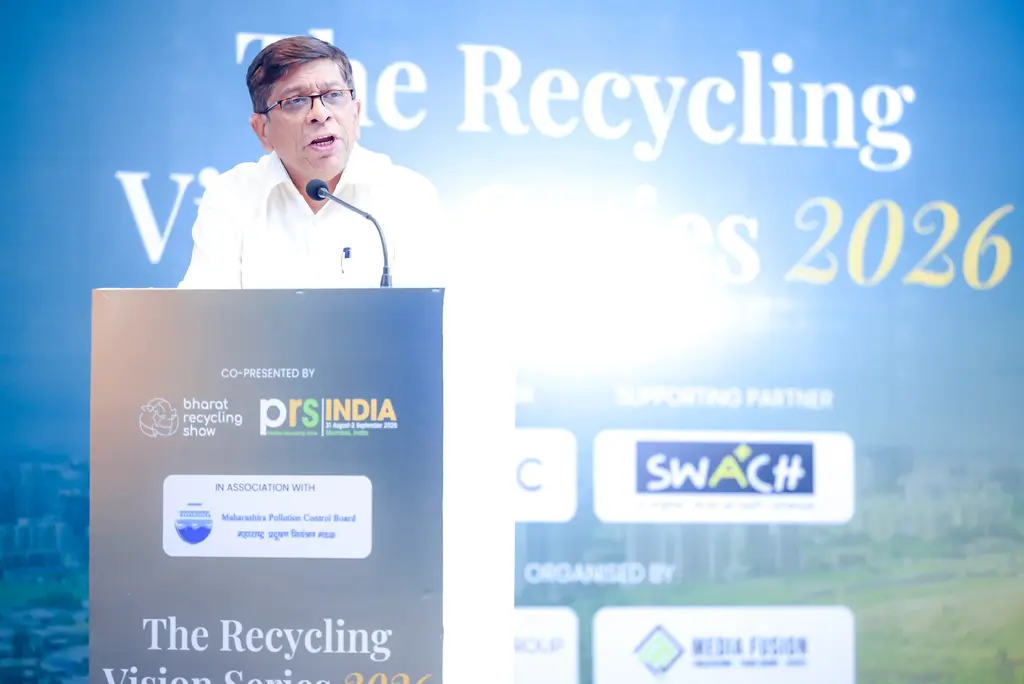
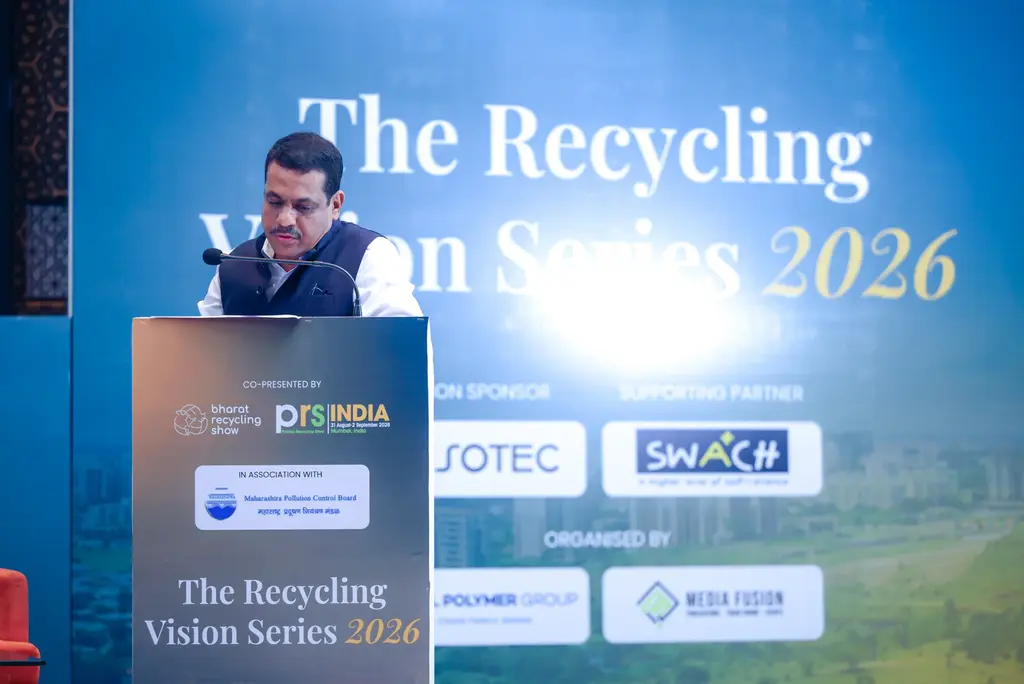
The edition ended with closing remarks from Nandkumar Gurav, Technical Advisor, MPCB, and a Vote of Thanks from Navanath Awatade SRO Pune for MPCB.